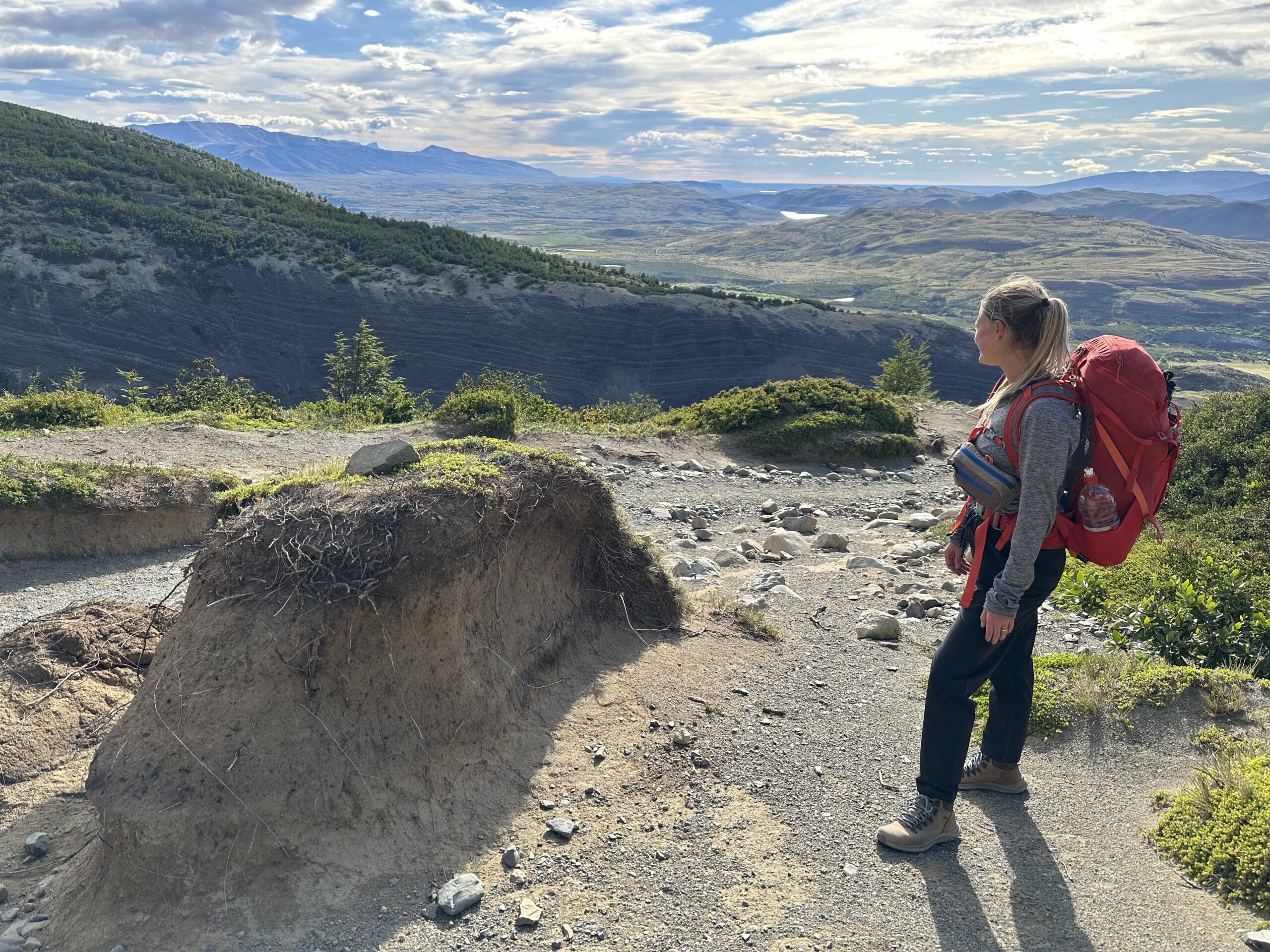
Want my exact W-Trek or Patagonia itinerary?
Email me at windowseatsonly@gmail.com, and I’ll send a PDF of my exact day-by-day plan I followed!
What I Wore on the W Trek in Patagonia (Torres del Paine Packing Guide)
Patagonia’s weather has a reputation! Wind, rain, sun, and even snow can all show up in a single day, especially on the Torres del Paine W Trek. I struggled finding the perfect things to pack for my trip, but I think I nailed it, so I want to share exactly what I wore and brought to hike the W Trek.
This post breaks down exactly what I wore each day, why it worked, and what I would recommend to anyone preparing for the trek.
How Did I Hike The W Trek
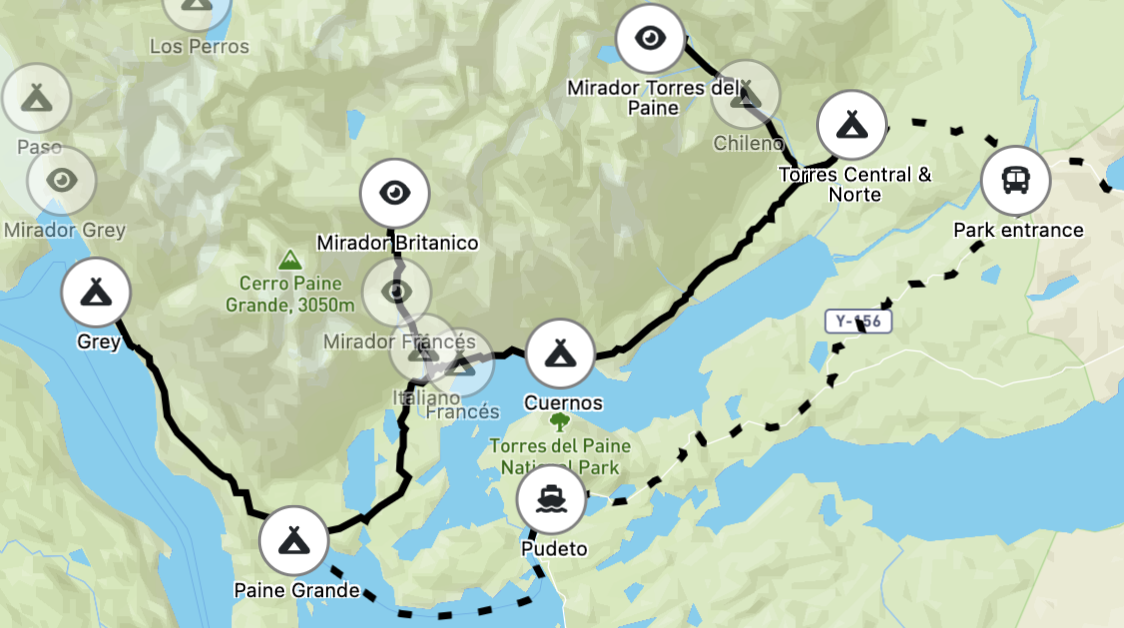
- I hiked the W Trek east to west in late December
- I stayed in refugios with tents provided (no carrying camping gear, which I 10/10 recommend if you are willing to pay a bit more)
- Due to limited time, I completed the trek in 3 days, hiking everything except Glacier Grey
- I was heading to Perito Moreno Glacier later in the trip, so this felt like the right place to cut
I have a full blog post on how to plan your W-Trek Hike here, so check that out for more details OR I have a complete Pagatonia Hiking Itinerary you can check out here.
My Layering Strategy for the W Trek
Before getting into each day, here is the simple approach I followed:
- Base layer: breathable long sleeve
- Bottoms: hiking pants or leggings
- Insulation: puffer jacket for cold, windy sections
- Shell: rain jacket for wind and rain
- Footwear: supportive, waterproof, and broken-in hiking boots + proper hiking socks
This mix allowed me to adjust quickly as conditions changed, which is what you need in Patagonia.
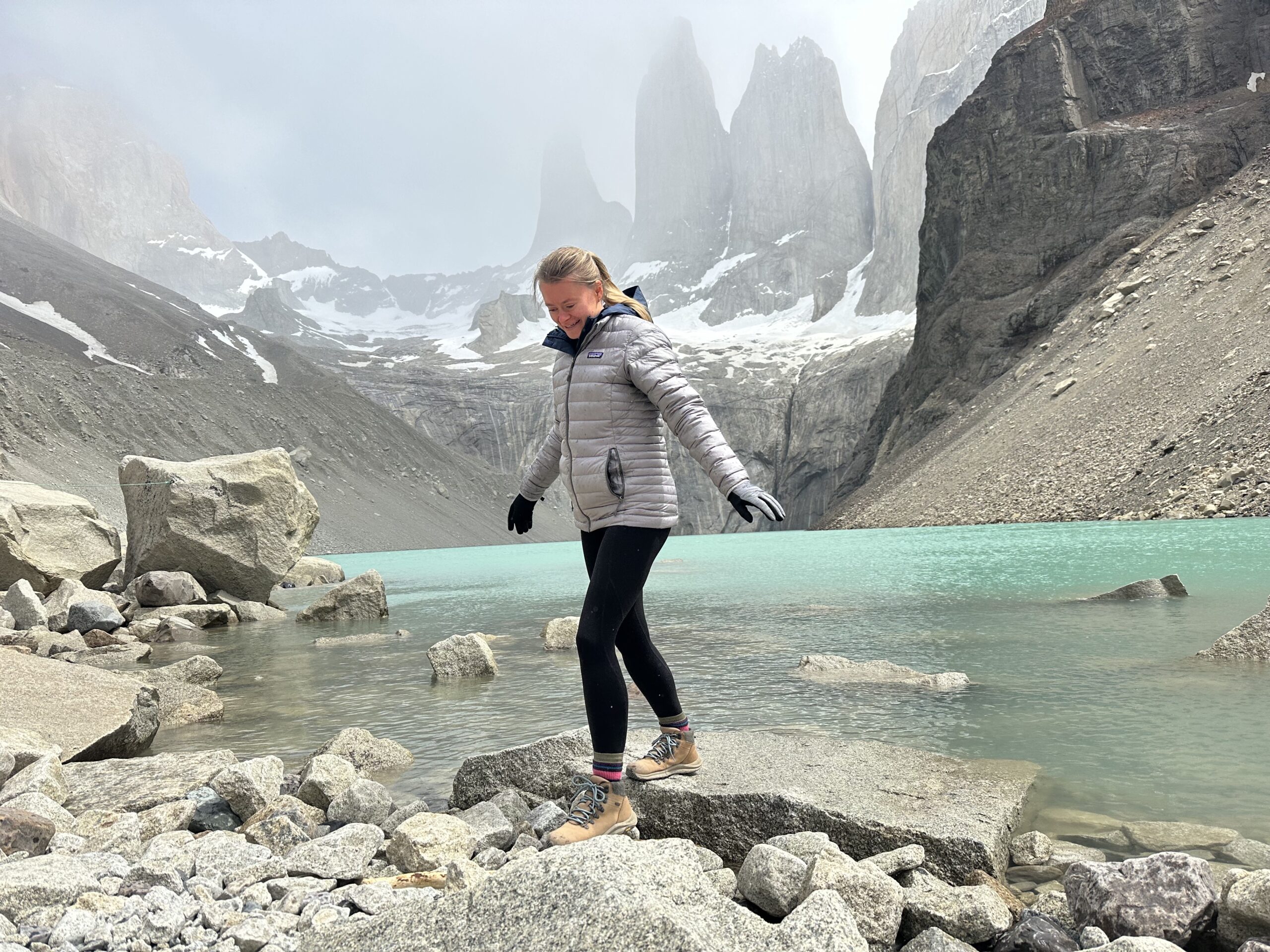
Day 1: All the Layers by the End
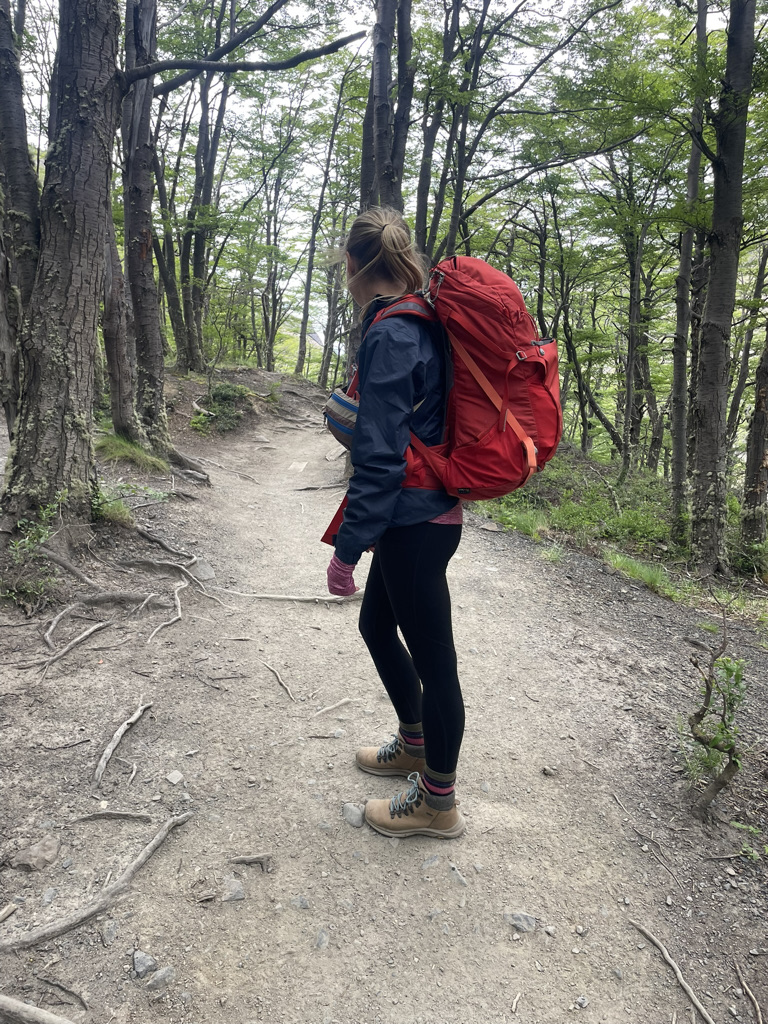
What I Wore
- Hiking boots
- Hiking socks
- Leggings
- Long-sleeve Nike quarter zip
Throughout the hike, I rotated between my Patagonia puffer jacket, a Columbia rain jacket, or no jacket at all, depending on the sun and wind. The conditions changed constantly, which is very typical for Patagonia.
Once I reached Mirador Torres, I was freezing. I needed every layer I had, plus a winter beanie and gloves. This was my first real reminder that even if the hike starts mild, viewpoints can be brutally cold and windy.
Day 2: The Perfect Patagonia Day
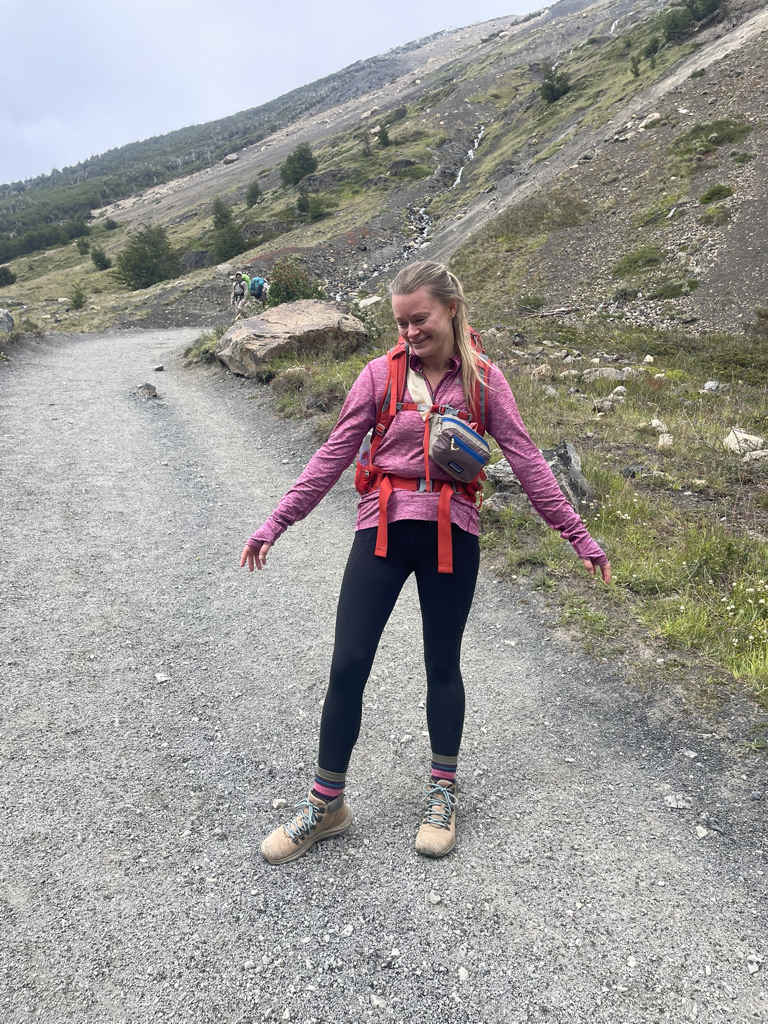
What I Wore
- Hiking boots
- Hiking socks
- Hiking pants
- Long-sleeve Nike quarter zip
Day 2 was hands down our nicest and warmest day on the W Trek. I was comfortable the entire hike without needing extra layers.
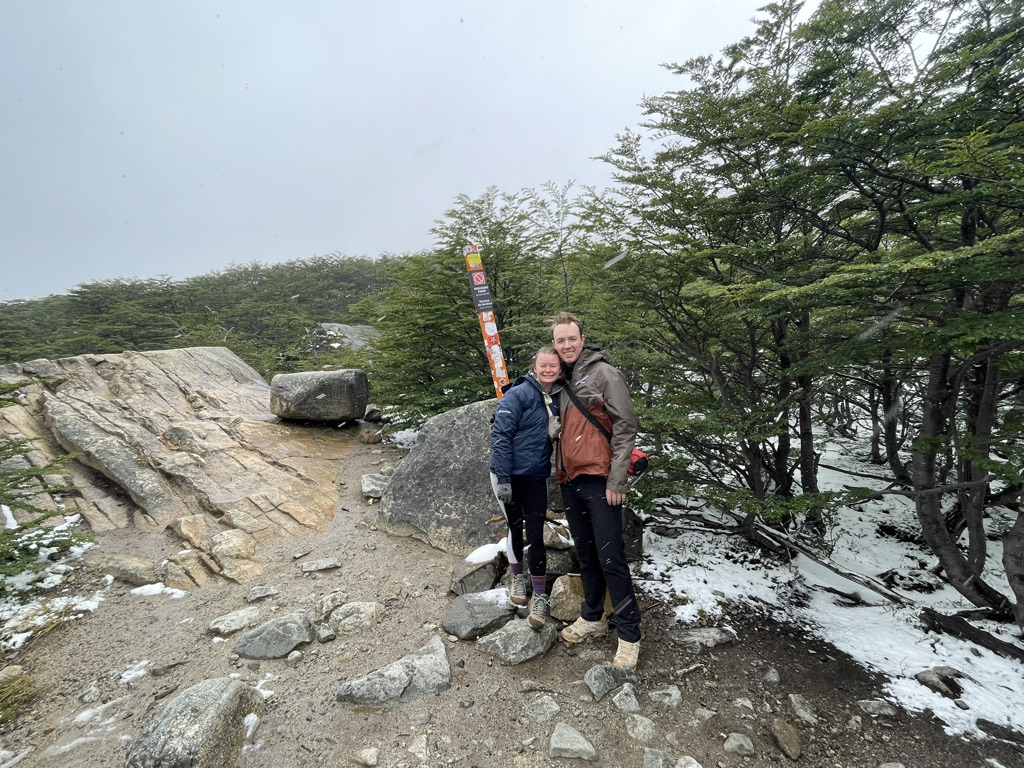
Day 3: Full Patagonia Weather
What I Wore
- Hiking boots
- Hiking socks
- Leggings
- Long-sleeve quarter zip
- Patagonia puffer jacket
- Columbia rain jacket
- Gloves
This was the coldest, windiest, and wettest day we experienced, with a mix of snow and rain. This was the day I was most grateful for having both a warm puffer and a solid rain shell. Gloves were also essential!
This day perfectly captured why Patagonia packing is all about layers!
Clothing Quantities & Tips for the W Trek
When packing for the W Trek, think versatility and layering, not extra outfits. Here is a breakdown of how many of each item I brought and how I used them:
- Hiking Socks: 1 pair per day.
- Underwear: 1 pair per day.
- Long-Sleeve Shirts/Base Layers: 2–3 is good. You can re-wear them for multiple days, especially on cooler days, since you will be layering with jackets anyway.
- Leggings/Hiking Pants: 2-3 pairs. I alternated between leggings and pants. Quick-dry fabrics are good to have.
- Puffer Jacket: 1. Essential for cold, windy, or snowy conditions.
- Rain Jacket: 1. Lightweight, packable, and a must-have.
- Gloves, Warm Hat, and Neck Buff/Gaitor: 1 of each. You can reuse them each day, and they are lightweight and easy to pack.
- Base Thermals: 1 pair. These are nice for sleeping, so you can re-wear them.
Pro tip: Stick to items that can mix and match, layer, and dry quickly.
Complete W Trek Packing List
The key is to pack light! You will be carrying everything on your back, and Patagonia’s changing weather means smart layers matter more than extra outfits. Stick to versatile pieces you can layer, rewear, and adjust throughout the day
Travel Essentials:
- Passport
- PDI Form (given to you when you enter Chile – a MUST to keep to show the campsites)
- Wallet (USD, Pesos, Credit Card)
- Printed + Digital Screenshots of all bookings (buses, accommodations, park pass)
- Snacks (Beef Jerky, Dried Mango, Protein Bars)
- Water Bottle (refill stations at each refugio)
- Kindle (for reading after hiking)
- Phone Charger (can recharge at each refugio)
Toiletries:
- Toothbrush & Toothpaste
- Shampoo, Conditioner & Body Wash
- Deoderant
- Face Clenser & Moisturizer
- Body Lotion
- Sunscreen
- SPF Lip Balm
- Hairbrush & Hair Ties
- Clensing Body Wipes
Clothing:
- Rain Jacket
- Puffer Jacket
- Long-Sleeve Shirts
- Thermal Base Layers (for sleeping)
- Hiking Pants/Leggings
- Hiking Socks
- Sports Bras & Underwear
Accessories:
- Cross-body bag (this is where I stored easily accessible/important items: passport, printed reservations, phone, sunglasses)
- Small Dry Bag (good for when you can leave your large pack at Camp Italiano and just bring a smaller pack – 3 Liter is good)
- Sunglasses
- Warm Hat
- Light Gloves
- Buff/Neck Gaitor
- Quick-Dry Towel
Footwear:
- Waterproof, broken-in hiking boots
- Slides/Sandles (for showering and wearing after hiking)
Other:
- Backpack (30-60 Liters)
- Backpack Rain Cover
- Headlamp (to use in the tents)
- Electrolytes
Things I Brought But Didn’t Use
LifeStraw/Water Filter: All of the refugios we stayed at had water refill stations, so I never needed to filter river water. If you are staying exclusively in refugios, this is likely unnecessary.
Deck of Cards: In theory, this sounded fun for evenings at the refugios, but after long hiking days, we were usually too tired to play. It is lightweight, but still something I could have skipped.
Large Battery Pack: I brought a large battery pack expecting limited charging access, but most refugios had outlets available. A smaller power bank would have been more than enough, if any.
Conclusion
Packing for the W Trek does not have to be as overwhelming as it sounds. You just need smart layers, versatile clothing, and a few essentials. Patagonia’s weather can change quickly, so focusing on quality, re-wearable pieces rather than extra outfits will make your hike much easier and more enjoyable.
I hope this guide gives you a solid starting point for your trip. With the right gear, you can focus on soaking up the views, tackling the trails, and actually enjoying the W Trek instead of stressing about your backpack.
Use this list as a guide, tweak it for your style and the season, and you will be all set for one of the most incredible hikes of your life. Do you have questions? Reach out to me via email. I am happy to help!
Follow for more on social media and email me with any questions!